

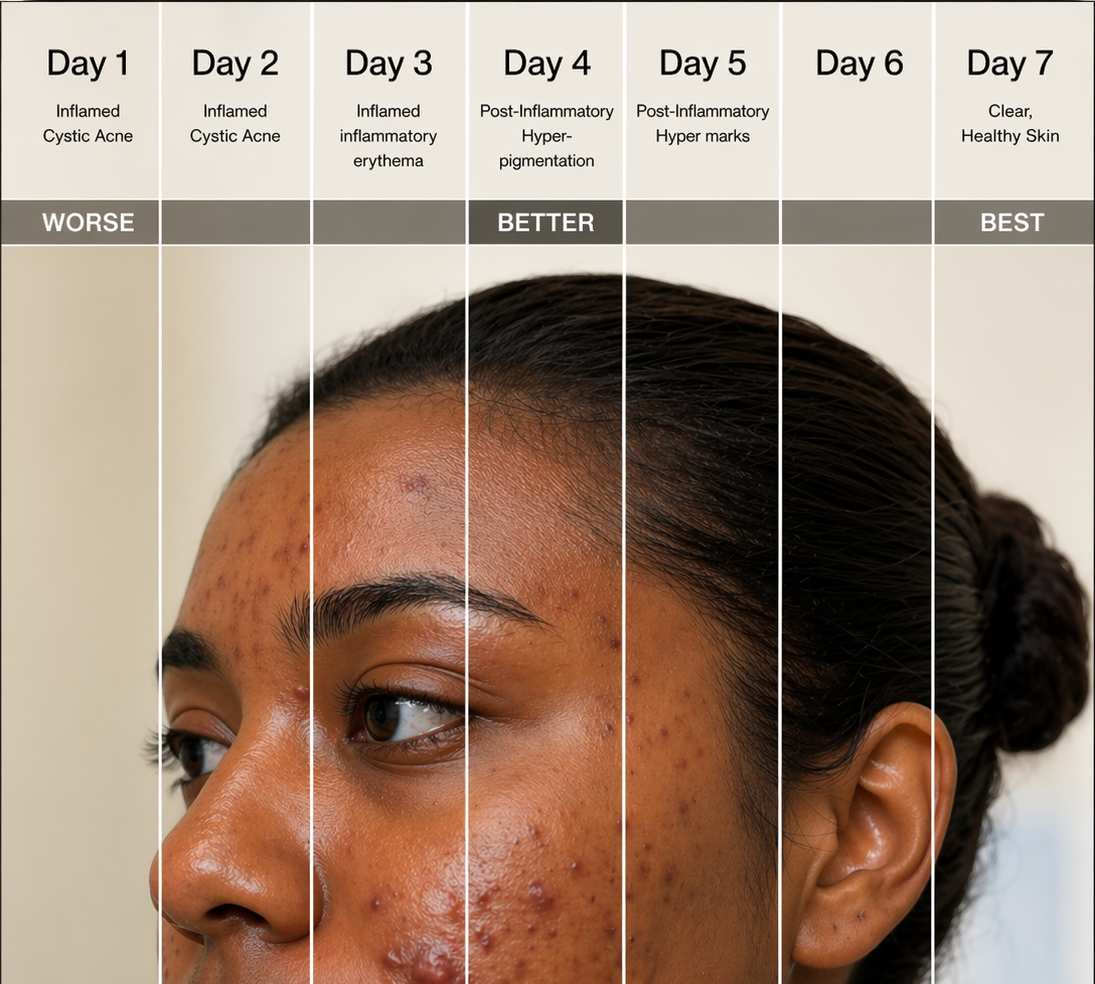
Benzoyl peroxide is one of the most effective science-backed treatments for acne. If you are struggling with breakouts, understanding how this powerhouse ingredient works can be the turning point for your skincare journey.
In this guide, we will break down why it is a gold standard in dermatology, how to use it without irritation, and how to pick the right strength for your skin type.
What is Benzoyl Peroxide and How Does It Work?
Benzoyl peroxide is a topical treatment used primarily to treat acne vulgaris. Unlike other ingredients that simply exfoliate the skin, benzoyl peroxide works through three main actions:
1. Kills Bacteria: It is an antibacterial agent that dives deep into the pores to kill Cutibacterium acnes, the bacteria responsible for inflammatory breakouts.
2. Clears Pores: It helps remove excess oil and dead skin cells that clog your pores.
3. Reduces Inflammation: By eliminating bacteria and debris, it helps calm the redness and swelling associated with pimples.
Benzoyl Peroxide vs. Salicylic Acid
While salicylic acid is great for dissolving blackheads and whiteheads, benzoyl peroxide is the superior choice for “angry” or cystic acne because of its oxygenating properties that kill bacteria instantly.
How to Use Benzoyl Peroxide for Best Results
To maintain a high reading retention time and ensure your skin stays healthy, you must follow a proper application routine. Using too much too fast is a common mistake that leads to dryness.
● Start Low: Begin with a 2.5% or 5% concentration. Higher percentages (like 10%) are often unnecessary and more irritating.
● The “Short-Contact” Method: If you have sensitive skin, apply the treatment for 5–10 minutes and then wash it off. This provides the benefits while minimizing dryness.
● Consistency is Key: Acne treatments take time. Expect to see significant results after 4 to 6 weeks of consistent use.
Important Safety Tip: Watch Your Fabrics
One thing many people forget is that benzoyl peroxide is a potent bleaching agent. It will bleach your towels, pillowcases, and even your hair. Always use white linens or wait for the product to dry completely before lying down.
Managing Side Effects and Skin Sensitivity
Because this ingredient is so powerful, it can cause peeling, redness, or a stinging sensation. To avoid a compromised skin barrier, follow these tips:
● Moisturize First: Apply a thin layer of moisturizer before your treatment to act as a buffer.
● Sun Protection: Benzoyl peroxide makes your skin more sensitive to UV rays. Always apply a broad-spectrum SPF 30+ during the day.
● Avoid Mixing: Do not use it at the same time as Retinol or Vitamin C unless formulated together, as they can cancel each other out or cause extreme irritation.
Conclusion
Benzoyl peroxide remains a staple in skincare because it works by targeting bacteria and keeping pores clear, it provides a reliable path to smoother skin. Start with a low concentration, stay consistent, and always protect your skin with moisturizer and sunscreen.
Frequently Asked Questions (FAQ)
Q1: Can I use Benzoyl Peroxide every day?
Yes, most people can use it once or twice daily. However, if you experience excessive peeling, scale back to once every other day until your skin builds tolerance.
Q2: Does Benzoyl Peroxide work on acne scars?
While it is excellent at preventing new acne (which prevents future scarring), it does not effectively treat deep, pitted scars or post-inflammatory hyperpigmentation. For those, ingredients like Vitamin C or Niacinamide are better suited.

Interesting
Wow!!