

Acne vulgaris is not merely a “teenage rite of passage”; it is a complex, chronic inflammatory disorder of the pilosebaceous unit that affects over 640 million people globally. For many, it is a persistent battle that impacts psychological well-being and leaves physical reminders in the form of scarring.
To treat acne effectively, one must move beyond the surface-level marketing of “miracle creams” and understand the biological machinery at play. Achieving 100% skin clarity requires a multi-targeted approach that addresses the four primary pillars of acne formation: follicular hyperkeratinization, excess sebum production, microbial colonization, and the inflammatory cascade.
I.The Causes of acne-Breakouts:
Before we explore the solutions, we must understand the enemy. Every lesion, from a tiny comedone to a painful cystic nodule, is the result of a biological “perfect storm.”
1. Follicular Hyperkeratinization: In healthy skin, dead cells are shed and expelled. In acne-prone skin, these cells become “sticky,” clogging the pore and creating a microcomedone—the microscopic precursor to all acne.
2. Sebum Hypersecretion:Influenced heavily by androgens (hormones), the sebaceous glands overproduce oil. This oil acts as the fuel for the breakout.
3. Microbial Proliferation: Cutibacterium acnes (C. acnes), a bacteria that lives naturally on the skin, thrives in the oxygen-poor, oil-rich environment of a clogged pore.:This is the body’s immune response. When the follicle wall ruptures, the immune system floods the area with white blood cells, leading to redness, swelling, and pus.
II. The Front Line:
Topical Therapeutics: For mild to moderate acne, topical treatments remain the gold standard. However, the efficacy of these treatments is entirely dependent on understanding their specific mechanism of action.
1. The Power of Retinoids (The Gold Standard)
Topical retinoids (Tretinoin, Adapalene, Tazarotene) are vitamin A derivatives that revolutionize skin behaviour. They work at the cellular level by binding to Retinoic Acid Receptors (RAR).
How they work: They normalize “cell turnover,” ensuring that dead skin cells don’t stick together. Essentially, they stop acne before it even starts by preventing the formation of microcomedones.
Clinical Insight: Retinoids also possess potent anti-inflammatory properties, making them essential for both active acne and long-term maintenance.
2.Benzoyl Peroxide (The Antimicrobial Workhorse):
Unlike antibiotics, bacteria cannot develop resistance to Benzoyl Peroxide (BPO).
How it works: It introduces oxygen into the pore. Since C. acnes is anaerobic (it hates oxygen), and the bacteria die instantly.
Usage Tip: It is most effective when used in “short-contact therapy” (washing it off after a few minutes) to reduce the risk of irritation and bleaching of fabrics.. Salicylic Acid (BHA).A lipid-soluble acid that can penetrate deep into the oily pore. It acts as a chemical exfoliant, dissolving the “glue” holding dead skin cells together. It is particularly effective for blackheads and whiteheads (comedonal acne).
III. Systemic Interventions:
When Topical Treatment is Not Enough: When acne is inflammatory, deep-seated, or resistant to topicals, a systemic (internal) approach is required.
1.Hormonal Therapy: Addressing the Root Cause
In many adults, particularly women, acne is a hormonal signal. Androgens stimulate the sebaceous glands.
Spironolactone: Originally a blood pressure medication, it is used “off-label” to block androgens at the skin level. It effectively “turns down the volume” of oil production.
Oral Contraceptives: Specific FDA-approved birth control pills can stabilize hormonal fluctuations that trigger monthly flare-ups.
•2.Antibiotics: The Temporary Bridge
Oral antibiotics (like Doxycycline or Seysara) are used to rapidly reduce inflammation and bacterial load. However, they are a temporary solution. Due to the risk of antibiotic resistance and disruption of the gut microbiome, they should rarely be used for more than 3–4 months.
•3.Isotretinoin (Accutane): The Closest Thing to a “Cure”
Isotretinoin remains the most powerful tool in dermatology. It is the only treatment that addresses all four pillars of acne simultaneously.
The Impact: It permanently shrinks sebaceous glands and changes the skin’s environment so that acne can no longer thrive.
The Caveat: It requires strict medical supervision due to potential side effects, including dryness, lipid elevation, and teratogenicity (risk to pregnancy).
IV. The “Gut-Skin Axis”:
Nutrition and Lifestyle: Modern research has confirmed that what we put in our bodies significantly influences our skin’s inflammatory state. While “greasy food” doesn’t directly cause acne, certain systemic triggers do.
The Glycemic Load: High-glycemic foods (white bread, sugary drinks, processed snacks) cause a spike in insulin. High insulin levels trigger IGF-1 (Insulin-like Growth Factor 1), which directly stimulates androgen production and sebum secretion.
Dairy and Acne: Some studies suggest that cow’s milk, particularly skim milk, contains growth hormones that can aggravate acne in predisposed individuals.
The Microbiome: A healthy gut often correlates with healthy skin. Probiotic-rich foods and a high-fiber diet can reduce systemic inflammation, which in turn reduces the severity of acne lesions.
V. Advanced Professional Procedure:
For those looking to accelerate results or treat the aftermath of acne (scars and pigmentation), clinical procedures offer a higher tier of intervention.
Chemical Peels: High-concentration Alpha and Beta Hydroxy Acids (Glycolic, Salicylic, TCA) are used to resurface the skin, clear deep impactions, and fade post-inflammatory hyperpigmentation (PIH).
Laser and Light Therapy: Blue light targets C. acnes bacteria, while Photodynamic Therapy (PDT) can temporarily “shut down” oil glands.
Microneedling and Subcision: For structural scarring (pitted or “atrophic” scars), these techniques stimulate new collagen production to “fill in” the indentations from within.
VI. Designing a Fail-Proof Routine:
The greatest mistake in acne treatment is “over-stripping” the skin. A compromised skin barrier leads to more inflammation and more breakouts. A high-retention skincare philosophy follows this structure:
Cleanse: Use a pH-balanced, non-stripping cleanser.
Treat: Apply your active ingredient (Retinoid or BPO) to dry skin to minimize irritation.
Hydrate: Use a non-comedogenic (pore-clogging) moisturizer containing ceramides to repair the barrier.
Protect: UV rays darken acne scars and increase inflammation. A daily SPF 30+ is non-negotiable.
VII. Conclusion:
The Roadmap to Permanence:
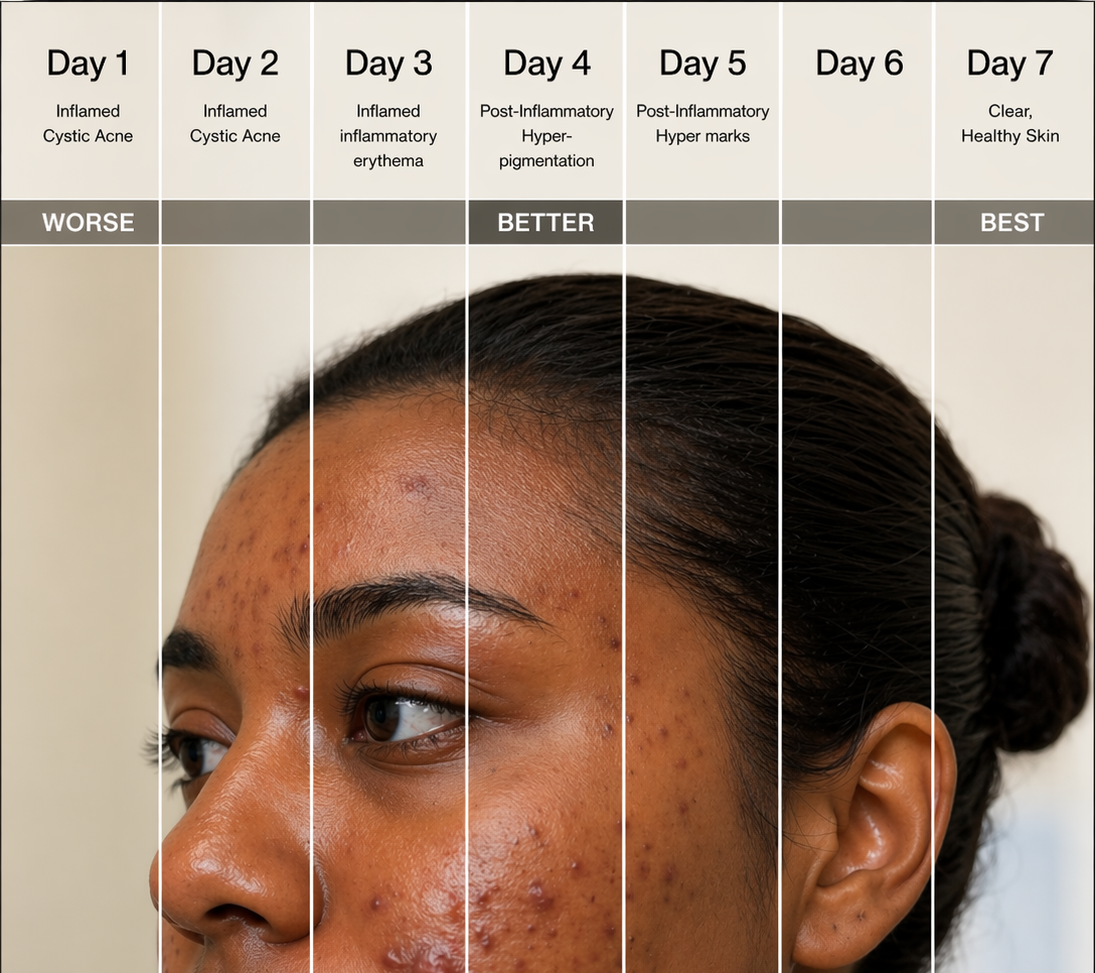
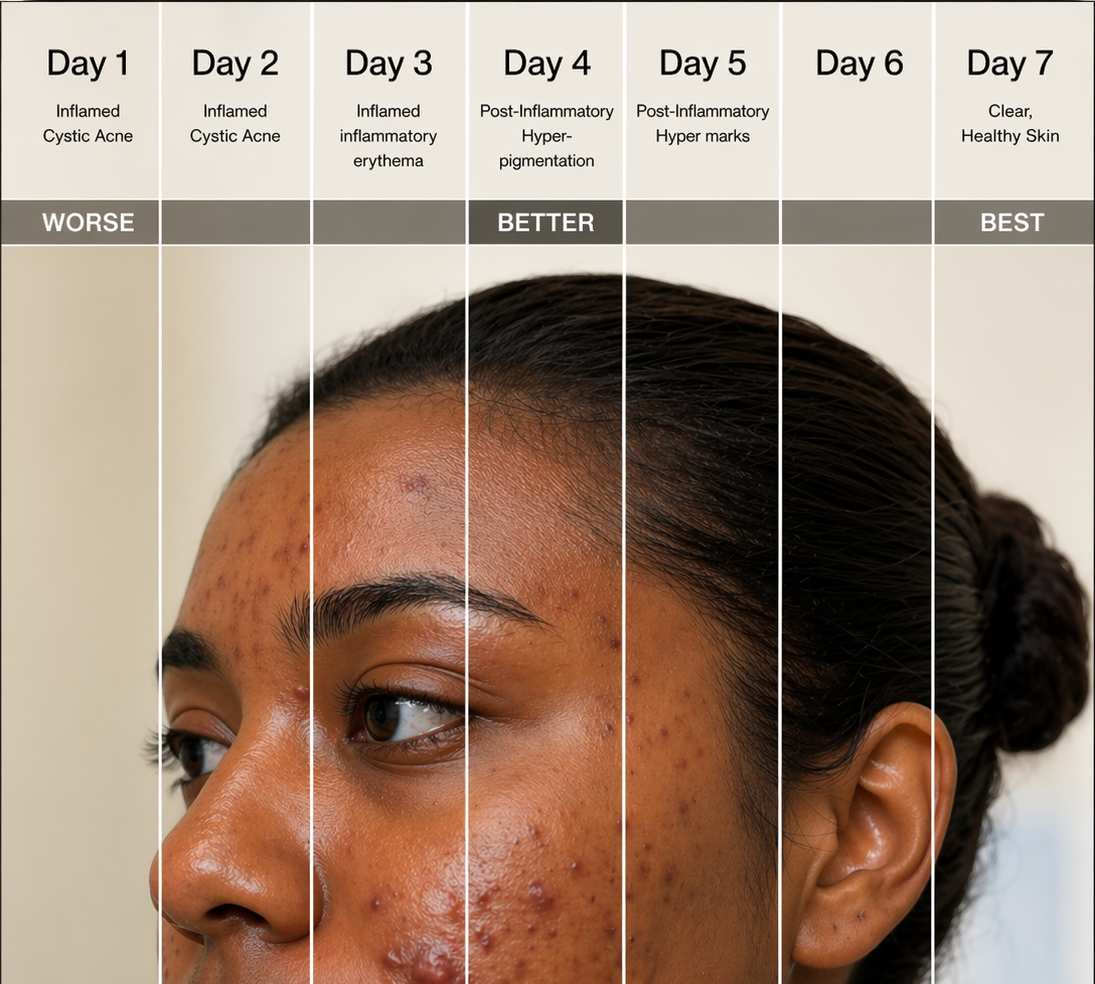
Treating acne is a marathon, not a sprint. Most clinical treatments require a minimum of 8 to 12 weeks to show significant results, as this is the time required for multiple skin-cell turnover cycles.
The secret to 100% retention and 100% results lies in consistency over intensity. By targeting the biological roots of acne—hyperkeratinization, sebum, bacteria, and inflammation—and supporting the skin barrier through science-backed lifestyle choices, clear skin becomes an achievable reality rather than a distant hope.
The path to clear skin is paved with patience, evidence-based ingredients, and a deep respect for the skin’s complex biology. Stop chasing the “quick fix” and start investing in the science of your skin.
Informative